Career AI: Building an Automated Career Roadmap Engine
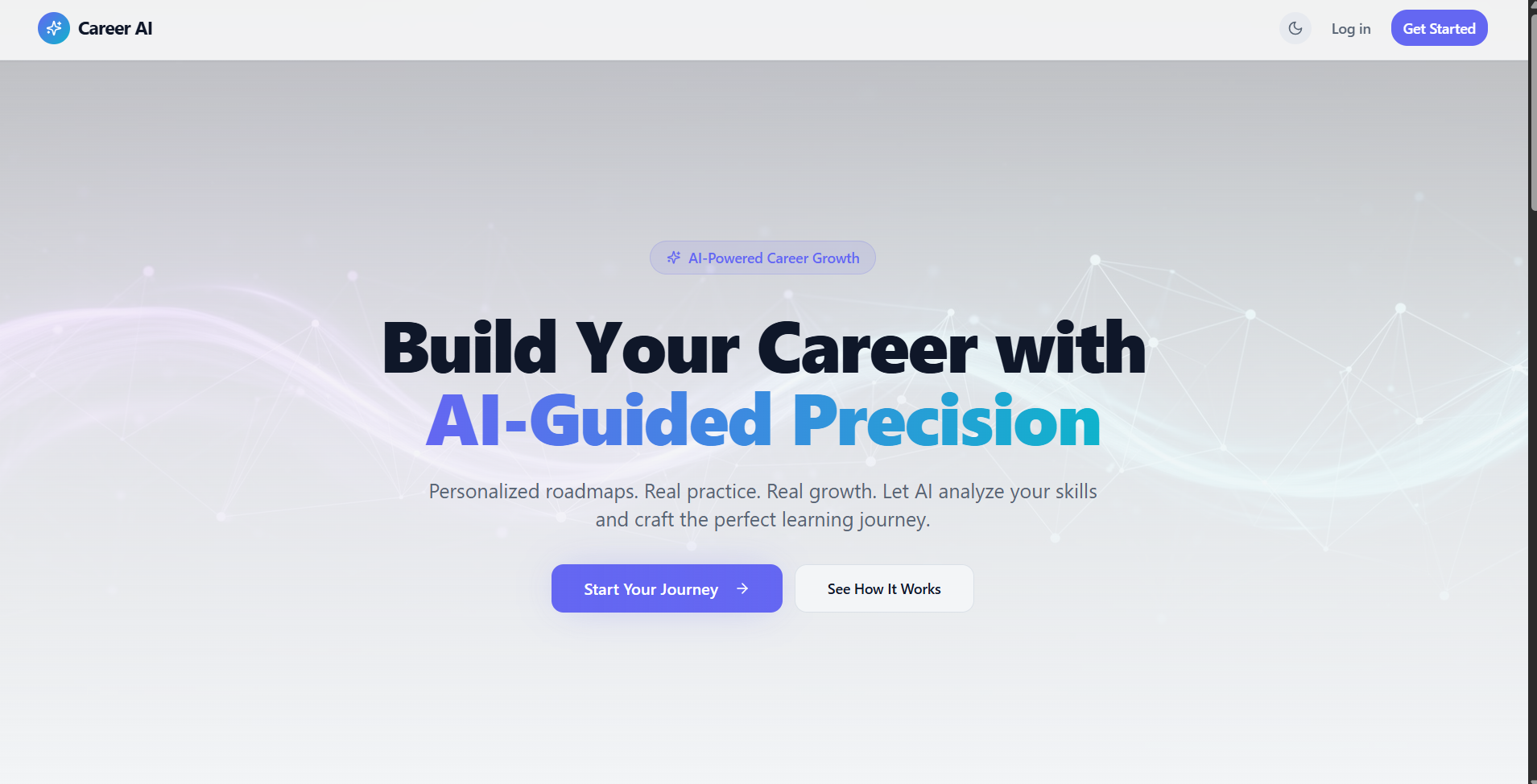
Overview
Career AI is a comprehensive career guidance platform designed to solve the "tutorial hell" problem faced by thousands of software development students globally. Rather than forcing users to sift through disjointed online courses, the platform uses artificial intelligence to assess a candidate's current capabilities, recommend fitting target roles, and build personalized, multi-step learning roadmaps.
From a software engineering standpoint, Career AI is built using a modern decoupled architecture. The frontend is a highly responsive Single Page Application (SPA) built with React and Vite. The backend is an asynchronous Python service written in FastAPI, integrating LangChain and the OpenAI API to execute structured data extractions, prompt chains, and vector-backed document ingestion.
Problem Statement
Most junior developers and students suffer not from a lack of educational content, but from a complete lack of targeted direction. They jump from one tutorial to another, learning separate tools without understanding the logical connections between them or how they apply to real-world software positions.
When these developers attempt to evaluate their skills, they rely on subjective self-assessments or generic automated tests that do not match industry expectations. Existing career tools are either manual and expensive, or generic and unhelpful, generating standard lists of links that fail to account for the user's specific project history, coding background, or conceptual gaps.
The Solution
Career AI solves this by automating the assessment and routing process. The system accepts a PDF resume, parses its structure using an LLM-driven schema extractor, and analyzes the candidate's level (e.g., beginner, intermediate, advanced) relative to several software domains (like Frontend, Backend, Data Engineering, or Mobile).
Once a domain is suggested, the system generates a tailored roadmap. Unlike generic roadmaps, this roadmap contains specific milestones designed around the user's current gaps. Each node in the roadmap is interactive, containing structured video resources, theoretical articles, localized quizzes, coding challenges, and mock interview modules. This guides the student from initial confusion to job readiness within a unified feedback loop.
System Architecture
The platform's architecture is structured to ensure fast rendering times, secure API storage, and robust error handling.
When a user uploads a resume, the React client transmits the file via a multi-part form request to the FastAPI gateway. The backend handles this asynchronously using Python's asyncio loop, reading the document binary, extracting raw text, and passing it to a LangChain extraction chain. The chain processes the unstructured text into a highly structured JSON object representing the user's skills, experience, and educational background.
[ React Client ] (Form Upload) -> [ FastAPI Gateway ] -> [ LangChain Extractor ] -> [ OpenAI API ]
Engineering Challenges & Solutions
Challenge: Large Ingestion Pipelines & Latency
Parsing PDF files and compiling roadmap JSON objects can take up to 15 seconds. This long delay can cause users to disconnect or reload the page.
Solution:
We implemented Response Streaming using FastAPI's StreamingResponse class. The client reads roadmap milestones as they are yielded by the model, rendering UI elements dynamically. Additionally, we write SHA-256 hashes of resume strings to PostgreSQL. Before invoking model APIs, the system queries the database. If a matching hash is found, the cached profile is returned in under 200ms.
Lessons Learned
Building Career AI demonstrated that schema validation is critical when using LLMs. Natural language requests must be verified programmatically using Pydantic classes on the API layer.